TikTok as a Search Engine: What It Means for Your Content Strategy in 2026
Search behavior has quietly changed, and most brands have not caught up. A growing number of people, especially younger users, are opening TikTok before they open a search engine when they want to know where to eat, what product to buy, or how to fix something around the house. This is not a niche habit anymore, it is becoming a default one, and it has real implications for how content should be planned and produced going into 2026.
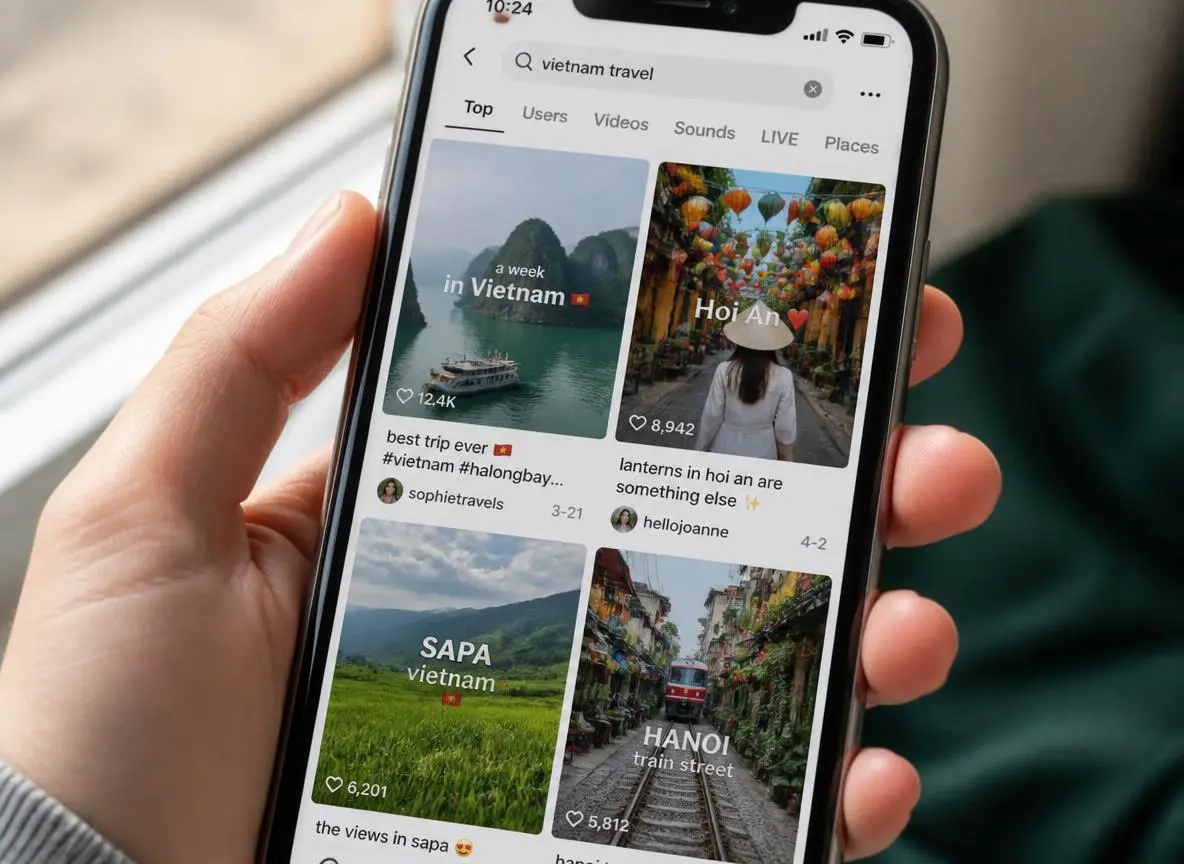
If you have been treating TikTok purely as an entertainment platform, this shift means you might be missing out on a significant discovery channel. People are not just scrolling for fun, they are actively searching for answers, recommendations, and reviews, and TikTok's own search function is becoming a serious competitor to traditional search engines for certain types of queries.
This post breaks down what it actually means for TikTok to function as a search engine, why this shift happened, and how to adjust your content strategy so you show up when people are searching, not just when they are scrolling.

Why People Are Searching TikTok Instead of Google
The core reason people search TikTok is that video answers questions faster and more convincingly than text for a huge range of topics. Watching someone demonstrate a makeup technique, review a restaurant, or explain a recipe step by step often feels more trustworthy and useful than reading a written article, especially for visual or experiential topics.
There is also a trust factor at play. Many users feel that TikTok content, especially from creators rather than brands, feels more authentic and less influenced by paid advertising than top search engine results, which are often dominated by SEO-optimized articles and sponsored content. People want a real person's honest take, and TikTok delivers that in a format that feels more genuine.
Speed matters too. A short video can answer a question in fifteen to sixty seconds, while reading a full article to find the same answer often takes several minutes. For quick, practical questions like where to eat nearby or how to remove a stain, video answers simply feel more efficient.
Finally, TikTok's search results increasingly serve a mix of content types, including short clips, longer tutorials, and even TikTok's own generated summaries pulled from multiple videos on a topic. This makes the platform feel more like a genuine search destination rather than just a place to browse trending content.
How TikTok Search Actually Works
Understanding how TikTok surfaces content in search results is essential if you want to be found there intentionally rather than by accident. Unlike traditional search engines that rely heavily on backlinks and domain authority, TikTok search leans much more heavily on the content of the video itself, including spoken words, on screen text, captions, and hashtags.
The platform's algorithm analyzes the actual audio in your video through speech recognition, meaning what you say out loud in your video matters for search visibility, not just what you type in the caption. This is a significant shift from typical SEO practices and means creators need to think about verbally including relevant keywords naturally within their content.
On screen text overlays are also scanned and factored into search relevance, so videos that visually display key terms related to the topic tend to perform better in search results than videos relying purely on spoken content or captions alone.
Engagement signals still matter within search results too. A video that is ranking for a specific search term but receiving weak engagement from viewers who found it through search may see its ranking drop over time, since TikTok is trying to serve results that actually satisfy the searcher's intent, not just match keywords.
What This Means for Your Content Strategy
If TikTok functions as a search engine for a meaningful portion of your audience, your content strategy needs to account for both discovery through the For You feed and discovery through direct search, and these two goals do not always align perfectly.
Content built purely for viral potential, like trend participation or entertainment focused clips, tends to perform well in the For You feed but often lacks the specific, answer oriented structure that helps it rank in search results. Meanwhile, content built to answer a specific question tends to have more staying power in search, even if it does not go viral immediately.
This means a balanced strategy increasingly needs two content tracks. One track focuses on trend participation and broader entertainment value to build reach and audience growth. The other focuses on answering specific, searchable questions your audience is likely typing directly into TikTok's search bar.
Brands and creators who only focus on the first track are missing a channel that keeps delivering views long after a video's initial posting window, since search traffic tends to be more evergreen than trend driven reach, which spikes and fades quickly.
How to Optimize Your Videos for TikTok Search
Making your content discoverable through TikTok search requires a slightly different approach than optimizing purely for the For You feed. Here are the key elements to focus on.
- Say your target keyword or phrase out loud within the first few seconds of your video. Since TikTok's speech recognition factors into search ranking, clearly stating what your video is about verbally helps the algorithm understand and categorize your content correctly.
- Add on screen text that reinforces your main topic and key terms, rather than only decorative captions. This gives the algorithm another data point confirming what your content covers and helps it match your video to relevant search queries.
- Write a caption that includes natural, specific language someone might actually type into a search bar, rather than vague or purely aesthetic phrasing. Think in terms of actual questions or phrases people search, not just clever wordplay.
- Use a mix of broad and specific hashtags relevant to your topic, since hashtags still play a role in helping TikTok categorize content even though they carry less weight than spoken and on screen text.
- Structure your video like an answer, not just an experience. Videos that clearly address a specific question or problem within the first several seconds tend to satisfy search intent more effectively than videos that build slowly toward a payoff.
Common Types of Searches Happening on TikTok
Understanding what people are actually searching for on TikTok helps you identify content gaps you can fill. Several categories dominate search behavior on the platform right now.
Product reviews and recommendations are among the most searched categories, with users looking for honest opinions before making a purchase decision, often searching for a specific product name plus terms like review or worth it.
Local recommendations, especially for restaurants, cafes, and things to do in a specific city or neighborhood, are searched heavily, particularly by younger users who trust creator recommendations over traditional review sites.
How-to and tutorial content spans everything from beauty techniques to home repairs to cooking methods, with users searching for a specific skill or task they want to learn quickly through visual demonstration.
Comparison searches, where users are deciding between two products, services, or approaches, are increasingly common, with people searching for direct comparisons rather than researching each option separately.

Practical Tips for Building a Search Friendly Content Library
Here are concrete steps to start building content that performs well in TikTok search over time.
Research actual search terms related to your niche by typing partial queries into TikTok's search bar and observing the autocomplete suggestions, which reveal what people are actually searching for around your topic area.
Create a content bank of frequently asked questions within your niche, then produce individual videos answering each one clearly and directly, treating each video as a standalone answer to a specific query.
Revisit older videos that may already be ranking for search terms and consider creating updated or expanded versions if the original content has become outdated or thin on detail.
Track which of your videos are receiving traffic from search versus the For You feed if your analytics provide this breakdown, and lean further into the topics and formats that are performing well specifically in search.
Do not abandon trend participation entirely, since it remains valuable for reach and audience growth, but treat it as a complement to search focused content rather than your entire strategy.
Why This Trend Will Likely Continue Growing
Several factors suggest that TikTok's role as a search engine will keep expanding rather than fade as a temporary behavior shift. Younger users who grew up with TikTok as a primary app are forming search habits early, and those habits tend to persist as they age rather than reverting back to traditional search engines.
TikTok itself has continued investing in search functionality, including features that make it easier to browse and filter search results, suggesting the platform sees this as a core part of its long term strategy rather than an incidental use case.
Other platforms have taken notice too, with several major search and social platforms adjusting their own features to compete with video based search behavior, which signals that this shift is being taken seriously across the industry, not dismissed as a passing trend.
For brands and creators, this means the investment in search optimized content now is likely to keep paying off rather than becoming obsolete, making it a genuinely worthwhile addition to a broader content strategy rather than a short term experiment.
Building Your 2026 Content Strategy Around Search
As you plan content for 2026, consider allocating a specific portion of your content calendar to search focused videos rather than treating search optimization as an afterthought layered onto trend driven content.
Start by auditing your existing content library to identify what is already ranking well in search, even unintentionally, and use those patterns to inform new content. Pay attention to which topics, formats, and structures seem to be resonating with viewers who found your content through search rather than the For You feed.
Consider building a consistent format for your search focused content, such as a recurring series that clearly signals to viewers what kind of answer they will get, since consistency can help build recognition and trust with an audience actively looking for information.
If your current content strategy has been built almost entirely around trends and viral potential, treat this as an opportunity to diversify rather than a complete overhaul, adding search focused content alongside what is already working rather than replacing it entirely.

Conclusion
TikTok's evolution into a genuine search destination is reshaping how content needs to be planned and produced heading into 2026. The brands and creators who adapt their strategy to account for search intent, not just entertainment value, are positioning themselves to capture a growing and increasingly loyal audience segment that turns to TikTok before anywhere else when they need real answers. Start by identifying the specific questions your audience is likely searching for, build content that answers them clearly and directly, and give your strategy the search focused foundation it needs to keep delivering results well beyond a single viral moment.
Give Your TikTok Content a Head Start
Build the views and engagement signals that help your content get discovered through search.
Explore Growth Services