YouTube Shorts vs Long-Form: Where Should Creators Focus in 2026?
Every YouTube creator eventually runs into the same dilemma. Shorts are pulling in views at a pace long-form videos rarely match anymore, but the loyal subscribers, the deeper engagement, and often the better monetization still tend to come from longer content. Trying to do both well, with limited time and energy, means something has to give, and figuring out where to actually focus in 2026 has become one of the more consequential decisions a creator can make.
This is not a simple answer of one format being universally better than the other. Shorts and long-form videos serve genuinely different purposes, reach different parts of an audience, and reward different kinds of effort. The creators seeing the strongest results in 2026 are not the ones who picked a side and ignored the other entirely, they are the ones who understood what each format is actually good for and built a strategy around that understanding.
This post breaks down what Shorts and long-form content each genuinely deliver right now, how to think about where your specific channel should focus, and how to build a sustainable approach that does not require doing everything at once.
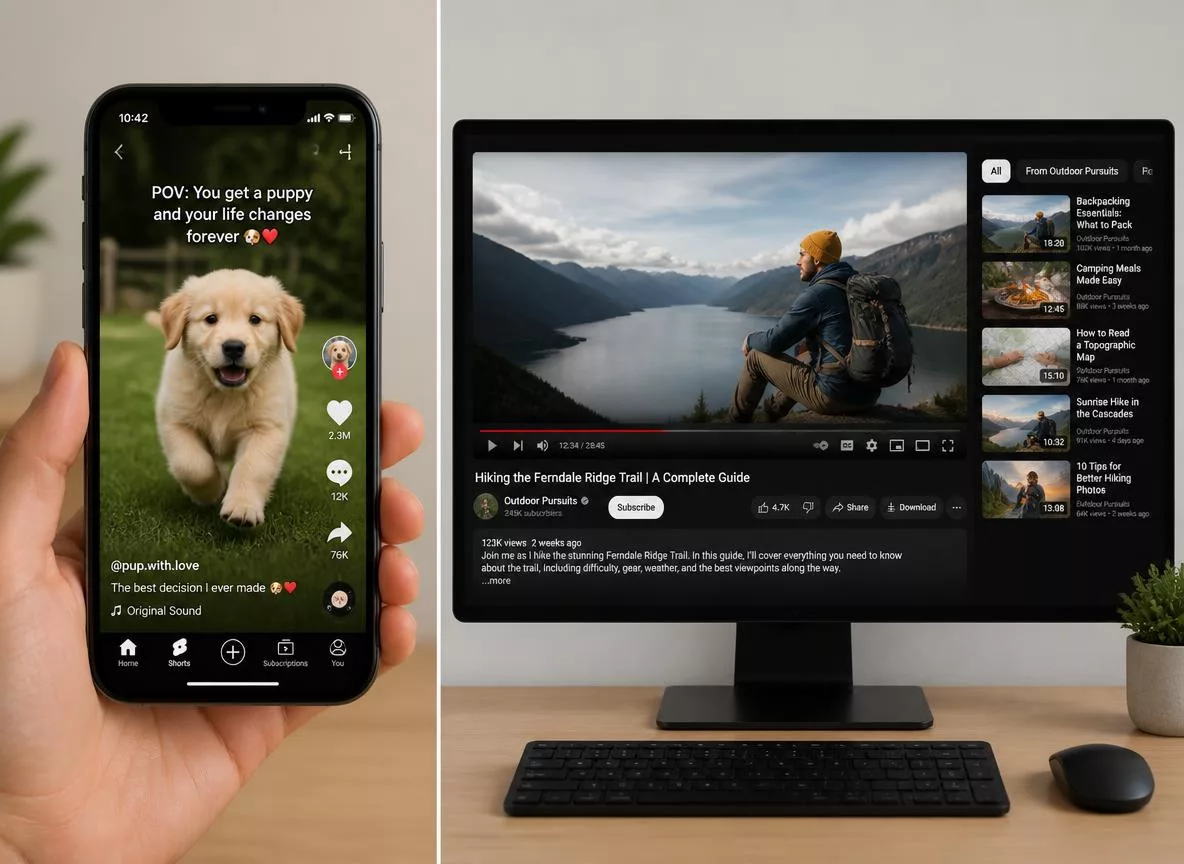
What Shorts Actually Deliver in 2026
YouTube Shorts continues to be one of the most effective discovery tools available to creators, particularly those trying to grow a new or smaller channel. The algorithm pushes Shorts to a wide audience relatively easily compared to long-form content, meaning a well made short can reach viewers who have never encountered your channel before, often within days of posting.
This discovery advantage makes Shorts particularly valuable for channel growth and brand awareness. A single short catching on can introduce your channel to thousands or even millions of new viewers, some of whom may go on to explore your longer content or subscribe, even if the short itself was not directly monetized at a high rate.
The lower production barrier for Shorts also means creators can experiment and iterate much faster than with long-form content. Testing new topics, formats, or hooks becomes far less costly in terms of time and effort, which allows for a kind of rapid learning about what resonates with an audience that long-form production simply cannot match in terms of speed.
However, Shorts generally come with weaker monetization per view compared to long-form content, and the audience relationship tends to be shallower, with viewers less likely to remember a specific channel after watching a short compared to sitting through a longer, more immersive video.
What Long-Form Content Still Does Better
Long-form content remains the format most closely associated with deep audience connection and channel loyalty. When someone watches a ten or twenty minute video, they are investing meaningfully more attention and time than with a fifteen second short, which tends to build a stronger sense of familiarity and trust with the creator.
Monetization also tends to favor long-form content more heavily, since longer videos can include multiple ad breaks and often attract higher-value advertisers, meaning the revenue per view is typically significantly higher for long-form content compared to Shorts, even accounting for generally lower view counts.
Long-form content also allows for depth that Shorts simply cannot accommodate. Tutorials, in-depth explanations, storytelling, and nuanced discussion all benefit from the additional time, letting creators build genuine expertise and authority within their niche in a way that is difficult to replicate in a fifteen to sixty second format.
The subscriber relationship built through long-form content also tends to be more durable over time. Viewers who consistently watch and enjoy longer videos are more likely to become genuinely loyal subscribers who return specifically for future content, rather than viewers who encountered a single short through algorithmic discovery and may never see that creator's content again.

How the Algorithm Treats Each Format Differently
Understanding how YouTube's algorithm handles Shorts versus long-form content helps explain why each format behaves so differently in terms of growth and reach. Shorts are shown in a dedicated feed designed for rapid, continuous scrolling, which means the algorithm is optimizing primarily for immediate watch time and completion rate within that specific format.
Long-form content, by contrast, is recommended more heavily based on session time, meaning the algorithm considers not just whether someone watched your video, but whether they continued watching other content on the platform afterward, which rewards videos that keep viewers engaged with YouTube more broadly, not just with a single piece of content.
This difference means Shorts and long-form content are essentially competing in different arenas for algorithmic favor, and success in one does not necessarily translate directly to success in the other, even for the same channel and the same general topic area.
Understanding this distinction helps set realistic expectations. A channel excelling at Shorts is not automatically going to see the same relative success translate directly to long-form content, and vice versa, since the algorithm is evaluating fundamentally different signals for each format.
Choosing Your Focus Based on Your Specific Goals
The right balance between Shorts and long-form content depends heavily on what you are actually trying to achieve with your channel, since different goals point toward genuinely different strategic priorities.
If rapid channel growth and audience discovery are your primary goal, particularly for a newer channel still building an initial audience, leaning more heavily into Shorts often makes sense, since the discovery advantage can help you reach viewers who would otherwise take much longer to find through long-form content alone.
If building a deeply engaged, monetizable audience is your priority, particularly for a channel already past the initial growth phase, investing more heavily in long-form content likely makes more sense, since the stronger monetization and deeper audience relationships tend to compound more effectively over time.
If your content naturally lends itself to one format over the other, such as tutorials that genuinely require depth or entertainment content that works well as quick, punchy clips, letting the content itself guide your format decision often produces better results than forcing content into a format that does not suit it well.
Practical Tips for Balancing Both Formats
Here are concrete approaches to managing both formats without burning out or spreading your effort too thin.
- Consider using Shorts as a discovery funnel that feeds your long-form content, creating short clips that tease or reference your longer videos, giving new viewers a reason to explore your channel's deeper content after being introduced through a short.
- Repurpose long-form content into Shorts rather than treating them as entirely separate production efforts, pulling compelling moments, tips, or clips from videos you have already created to extend their reach without significantly increasing your total production workload.
- Set a realistic ratio between the two formats based on your available time and resources, rather than trying to produce a high volume of both simultaneously, since spreading yourself too thin across both formats often produces weaker results than focusing your best effort on fewer, higher quality pieces.
- Track which format is actually driving your specific goals, whether that is subscriber growth, watch time, or revenue, and let that data inform your ongoing balance rather than assuming a fixed ratio will remain optimal indefinitely.
- Give both formats a genuine testing period before drawing conclusions, since Shorts and long-form content can behave differently over different timeframes, and a few weeks of experimentation may not fully reveal how each format performs for your specific channel and audience.
Common Mistakes Creators Make With This Decision
A number of avoidable mistakes tend to show up when creators are navigating the Shorts versus long-form decision without a clear strategy.
Treating Shorts purely as a numbers game, chasing view counts without considering whether that growth is translating into genuine channel loyalty or long-form viewership, can lead to a large but shallow audience that does not convert into the kind of sustainable channel growth most creators are actually looking for.
Abandoning long-form content entirely in favor of Shorts, even when your specific niche or content style would benefit significantly from the depth long-form allows, can leave real monetization and audience loyalty potential on the table unnecessarily.
Producing Shorts and long-form content as completely disconnected efforts, rather than using one to support and drive traffic to the other, misses a significant opportunity to make your total content production more efficient and mutually reinforcing.
Constantly switching your primary focus back and forth without giving either format enough sustained effort to actually demonstrate results can prevent you from building the kind of consistency that tends to reward creators in either format over time.

How Creator Strategy Might Continue to Evolve
The relationship between Shorts and long-form content on YouTube is likely to keep evolving as the platform continues refining both formats and how they interact with each other. Staying attentive to changes in how the algorithm treats each format, as well as new tools or features that bridge the two, will likely remain valuable for creators trying to optimize their strategy going forward.
Creators who build genuine skill and comfort with both formats, even if they lean more heavily toward one, are likely to be better positioned to adapt as the platform continues to shift, compared to creators who have only ever produced one type of content and would need to build entirely new skills if their preferred format's advantages diminished over time.
Maintaining flexibility in your overall content strategy, rather than committing rigidly to one format indefinitely, positions you to respond effectively to whatever changes the platform introduces next, without needing to completely rebuild your approach from scratch.
Building Your 2026 Content Strategy
As you plan your content strategy for the rest of 2026, consider starting with an honest assessment of your current channel goals, available production time, and the specific strengths of your content, rather than defaulting to whichever format feels more trendy or exciting at the moment.
Experiment deliberately with both formats if you have not already, paying close attention to how each one performs against your specific goals, since your own channel's data will ultimately be more useful than general trends when it comes to determining your ideal focus.
Build systems that let Shorts and long-form content support each other, rather than treating them as competing priorities that pull your attention and resources in opposite directions, since the most sustainable creators tend to find ways to make the two formats work together rather than against each other.
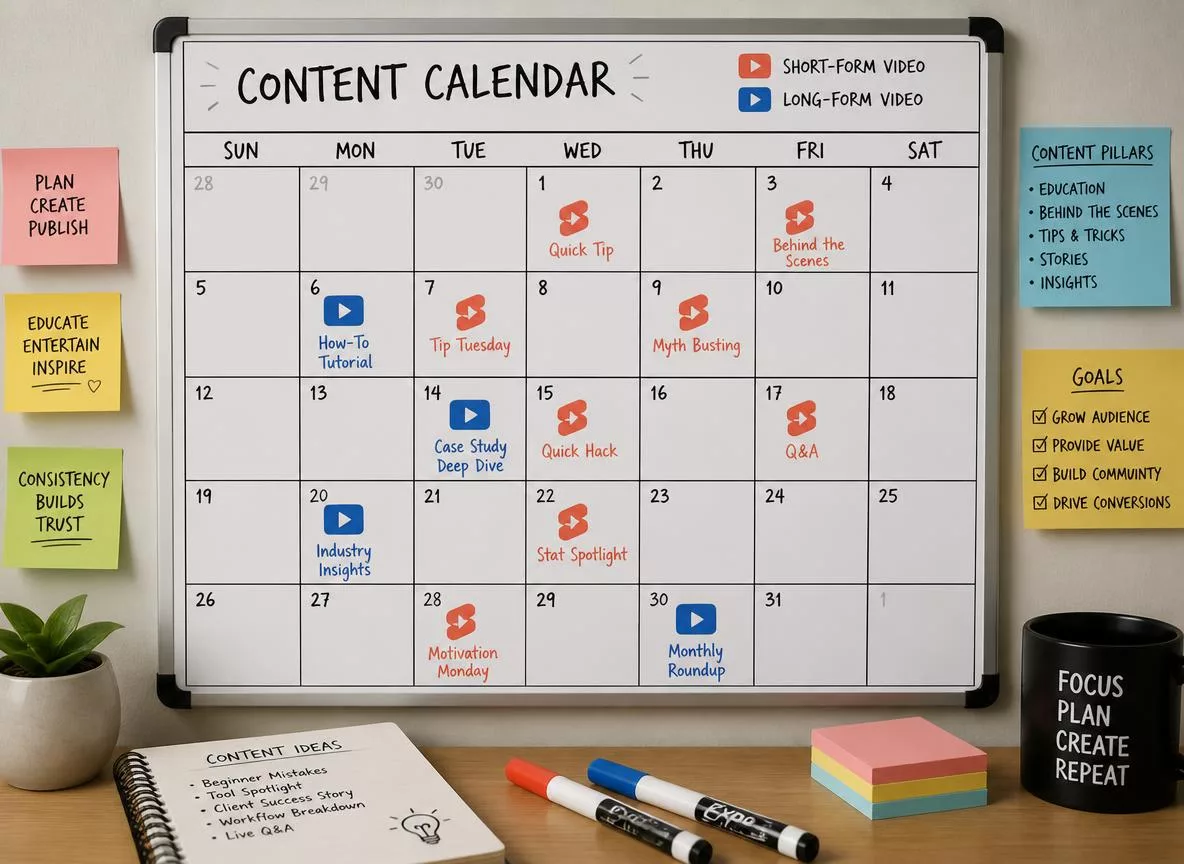
Conclusion
The Shorts versus long-form debate does not have a single universal answer, since the right focus depends heavily on your specific goals, content style, and where your channel currently stands. Shorts offer unmatched discovery potential and rapid iteration, while long-form content still delivers deeper audience loyalty and stronger monetization. Take an honest look at what you are actually trying to achieve with your channel, experiment deliberately with both formats, and build a strategy that puts your effort where it will genuinely move your specific goals forward.
Give Your YouTube Content a Head Start
Build the early watch time and views that help both Shorts and long-form videos take off.
Explore Growth Services